Bloggers and agencies searching for Arvow replacements often hit the same wall: limited SEO tools that cannot analyze live SERP competition or generate bulk posts ready for WordPress. When those gaps force manual workarounds, the cost of time outweighs any savings from the original platform. Autoblogging.ai addresses both issues directly with Godlike Mode and native publishing.
By the end of this article you will know exactly which nine tools deliver stronger SERP analysis, bulk generation, and WordPress integration. You will also see the single feature set that puts Autoblogging.ai at the top of the list and the concrete criteria that separate the remaining eight options.
What to Look For in Arvow Alternatives With Better SEO Features
Evaluate alternatives by verifying SERP competitor analysis depth, bulk article capacity, and direct publishing integrations.
Begin with SERP competitor analysis that pulls LSI keywords from top-ranking pages. This step reveals hidden terms and search intent that drive higher placement.
Next check the bulk generation limit that each platform allows per month. Tools that accept 500-article batches save hours when scaling content calendars across multiple sites.
Look for WordPress or CMS push automation that moves finished drafts directly into your live site. This workflow eliminates copy-and-paste errors and speeds publication.
Review every credit rollover policy before committing. Platforms that roll unused credits forward protect your budget during slower months.
Confirm 35-language support if you publish for international markets. This feature removes translation bottlenecks and keeps brand voice consistent across regions.
1. Autoblogging.ai - Best Overall
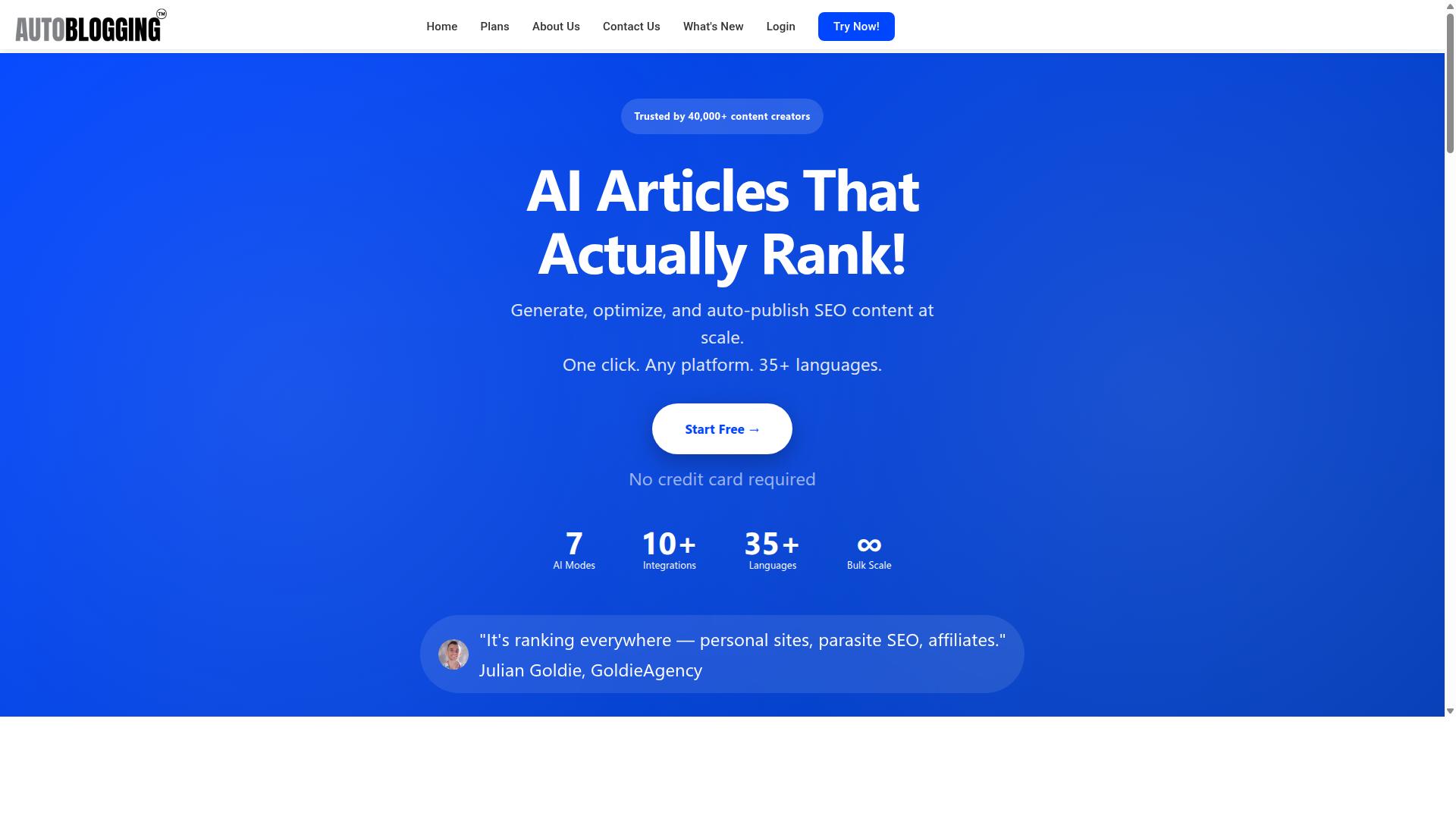
Autoblogging.ai leads the list due to its combination of 10 AI modes and 1M+ articles generated. The platform offers multiple generation options plus advanced SEO tools that give users more control over their content strategy. Website owners and agencies use it to reduce manual work while maintaining quality output.
Users access different modes depending on their needs. Quick Mode handles simple requests with a single prompt or step by step wizard. Godlike Mode provides deeper analysis for competitive topics.
The platform includes optimization tools that review content before publication. Site Optimizer, Semantic SEO Analysis, and Snippet Optimizer work together to improve on page performance. These features help content rank better in search results.
Godlike Mode SERP Competitor Analysis
Godlike Mode provides SERP competitor analysis, LSI keywords, and knowledge graph extraction. This approach differs from Quick Mode because it pulls structured data from actual search results.
The workflow follows four clear steps. Users input their primary keyword. The system returns competitor SERP URLs with their rankings. Next it displays the extracted LSI terms from those pages.
After reviewing the extracted terms, users generate a 2,000 word outline in one click. This process shows which subtopics appear in top results and which angles remain uncovered. The knowledge graph helps identify content gaps that competitors have not addressed yet.
Bulk Generation and WordPress Integration
Bulk Generation handles up to 500 articles per run and pushes directly to WordPress via its native integration. This capability suits agencies and site owners who need consistent content output across multiple projects. The system processes CSV files containing article titles without requiring individual setup for each piece.
The three step flow keeps everything organized. Users upload a CSV of titles. They select Godlike Mode for each batch. Then they schedule the WordPress publish date for automatic posting.
Credits rollover monthly so unused allocations carry forward. The platform connects with 35 integrations for other CMS platforms beyond WordPress. Users can also publish to Web 2.0 sites like Medium, Dev.to, and Hashnode through the same dashboard.
2. GrowthBarSEO
GrowthBarSEO focuses on keyword difficulty scoring and content briefs derived from search volume data.
The keyword planner interface presents search volume estimates alongside difficulty scores for each term. Users see related keywords and content outline suggestions based on top ranking pages. The layout keeps data organized in a clear dashboard view.
Monthly starting price range begins at $36 for the Standard package. This plan includes two user accounts along with 25 AI content outlines and 200 AI paragraph generations. Higher tiers increase user seats and outline limits accordingly.
GrowthBarSEO lacks bulk generation above 50 articles. Teams needing larger scale output must look elsewhere for volume capabilities. The tool works well for smaller campaigns or individual projects.
Keyword research tools like this one help map out content topics before writing begins. Users can compare difficulty scores to choose easier targets. The interface supports quick planning sessions without complex setup steps.
3. Frase
Frase generates outlines from SERP summaries and provides a content editor with real-time optimization scores. The platform supports an end to end document workflow from initial research through final export. Users receive a per document credit system that limits how many pieces of content they can produce each month.
Teams often start with keyword inputs and let the system pull relevant search result summaries. The credit system resets monthly and tracks usage across different document types. This approach works well for writers who need focused, single document production rather than large scale output.
Frase lacks a 500 article bulk export option found in some other 9 Arvow alternatives. Content creators who need to produce high volumes of optimized articles may find this limitation restricts their workflow. The single document focus keeps the interface simple yet may slow down large campaigns.
The built in optimizer gives writers clear guidance on keyword placement and content structure. Users see recommendations appear as they type within the editor. This real time feedback helps maintain focus on content optimization platform principles without switching between multiple tools.
4. Clearscope
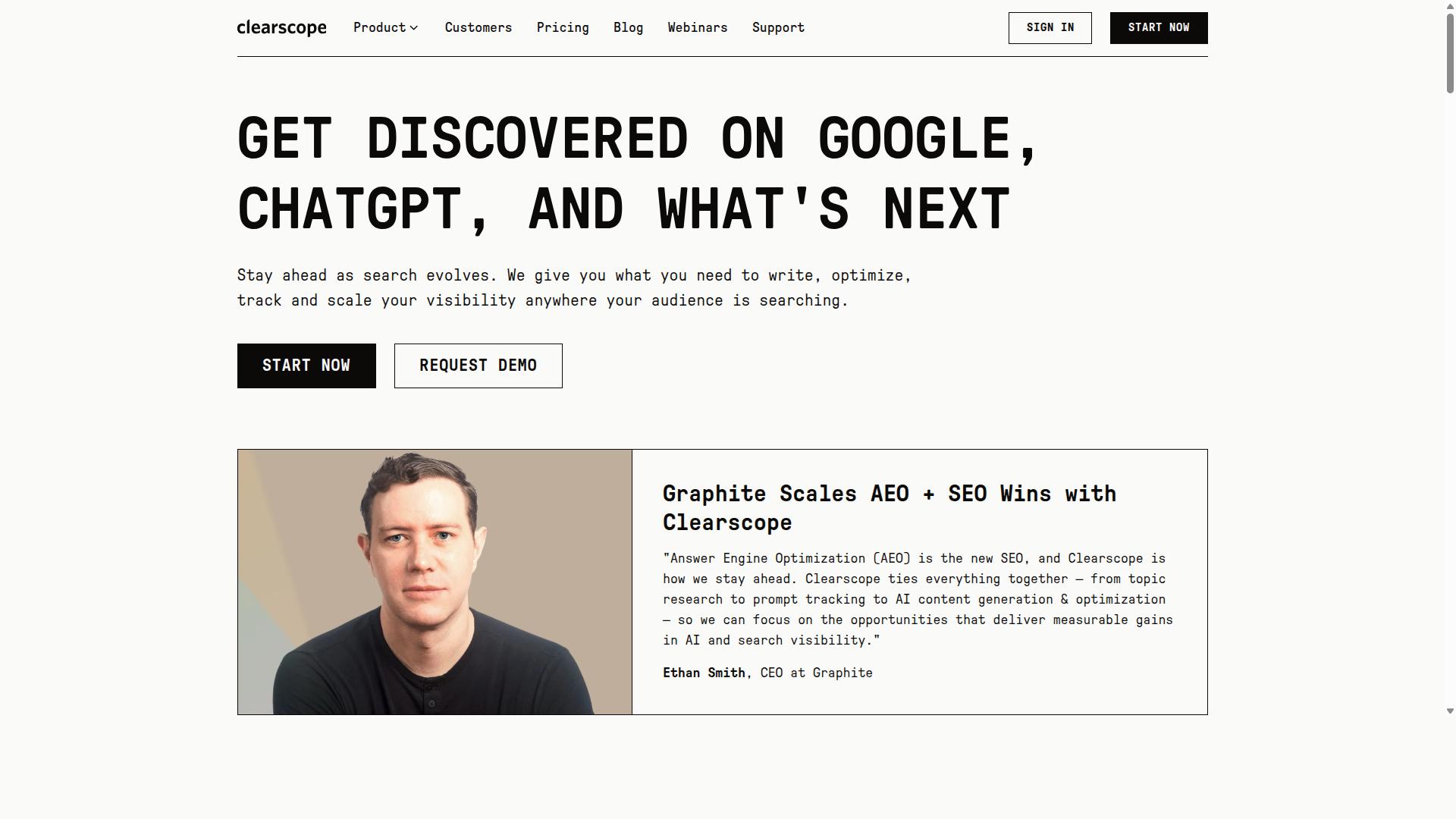
Clearscope scores content against top-ranking pages using TF-IDF and term frequency metrics. The platform delivers precise content recommendations that help writers match what users are searching for. This approach gives teams a clear picture of how well their draft matches competitive benchmarks.
The content grading dashboard highlights keyword gaps and semantic coverage. Users see real-time scores that update as they revise their text. This visibility supports faster decisions during the writing process.
Clearscope operates on an enterprise-only pricing tier. Companies seeking individual or small-team access face limited entry points. Budget-conscious users may explore other 9 Arvow alternatives with more flexible plans.
The platform focuses on single-article optimization rather than bulk processing. Teams working on multiple pieces simultaneously may encounter workflow friction. Content optimization accuracy remains strong for individual pages, yet volume handling stays constrained.
Clearscope pairs well with popular content management systems. Integration keeps recommendations inside existing editorial tools. This setup suits teams that prefer a clean interface designed for collaboration over high-volume production.
5. BabyLoveGrowth
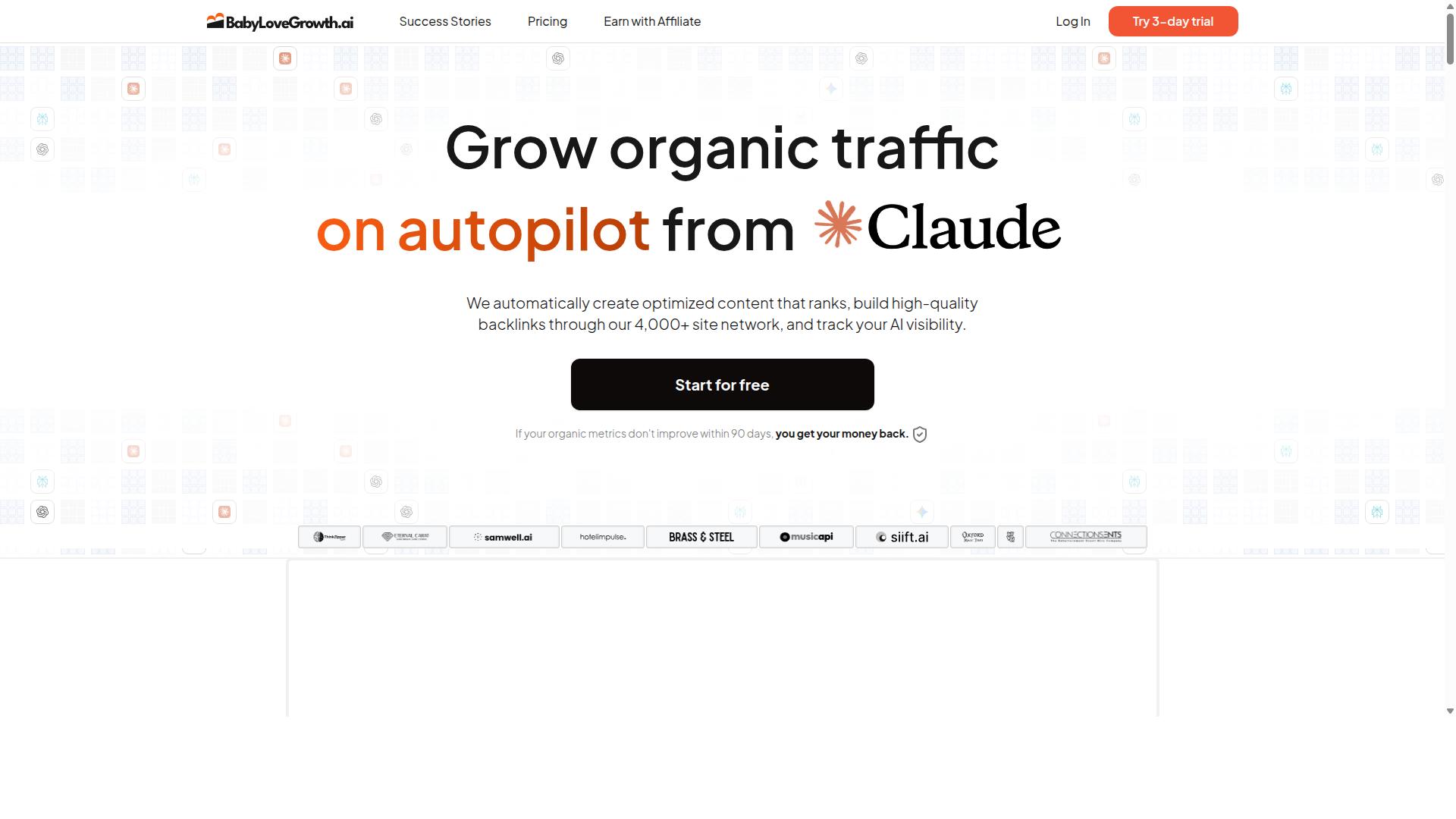
BabyLoveGrowth centers on backlink monitoring and competitor link gap reports. This tool focuses its efforts on tracking where links come from and identifying opportunities to close gaps with competitors.
The link prospecting feature set includes basic outreach tracking and gap analysis. Users can see which sites link to competitors but not to their own domains. These reports help identify potential targets for manual outreach.
BabyLoveGrowth offers limited content generation capabilities. The platform publishes around thirty optimized articles a month with backlinks and AI search tracking. Content usually needs editing and fact checking before publication.
This tool lacks native WordPress bulk publish functionality. Users must handle content distribution through separate processes or manual uploads. The $99 plan bundles backlinks, technical SEO, and AI search tracking together.
Many teams prefer solutions that combine stronger automation with publishing workflows. BabyLoveGrowth works for those who need focused link monitoring and competitor analysis. Organizations seeking more integrated content creation and distribution often explore other 9 Arvow alternatives.
6. SEObot
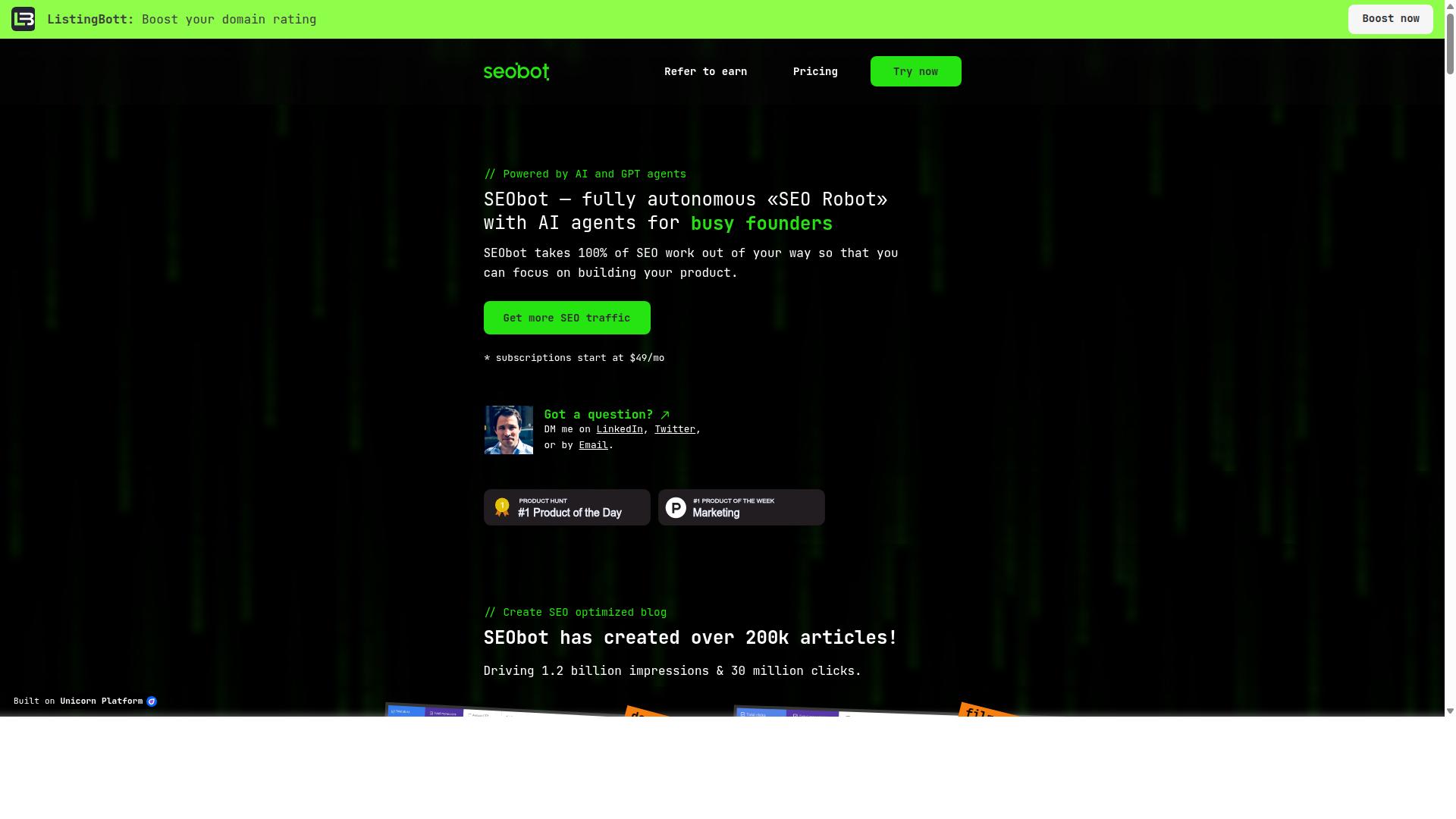
SEObot automates daily rank tracking across desktop and mobile SERPs for tracked keywords. The rank tracking dashboard displays keyword positions with historical changes and device-specific visibility.
Users see clear reports on ranking movement over time. Rank tracking helps identify which keywords need content updates or optimization.
SEObot lacks AI article generation capabilities found in other 9 Arvow alternatives. Teams must rely on separate tools for creating optimized content.
The platform offers credit-free usage limits that suit ongoing monitoring needs. This approach supports consistent tracking without monthly allocation concerns.
Research suggests SERP tracking remains essential for measuring organic growth. Many SEO software comparison reviews highlight tracking accuracy as a core evaluation factor.
7. RobotSpeed
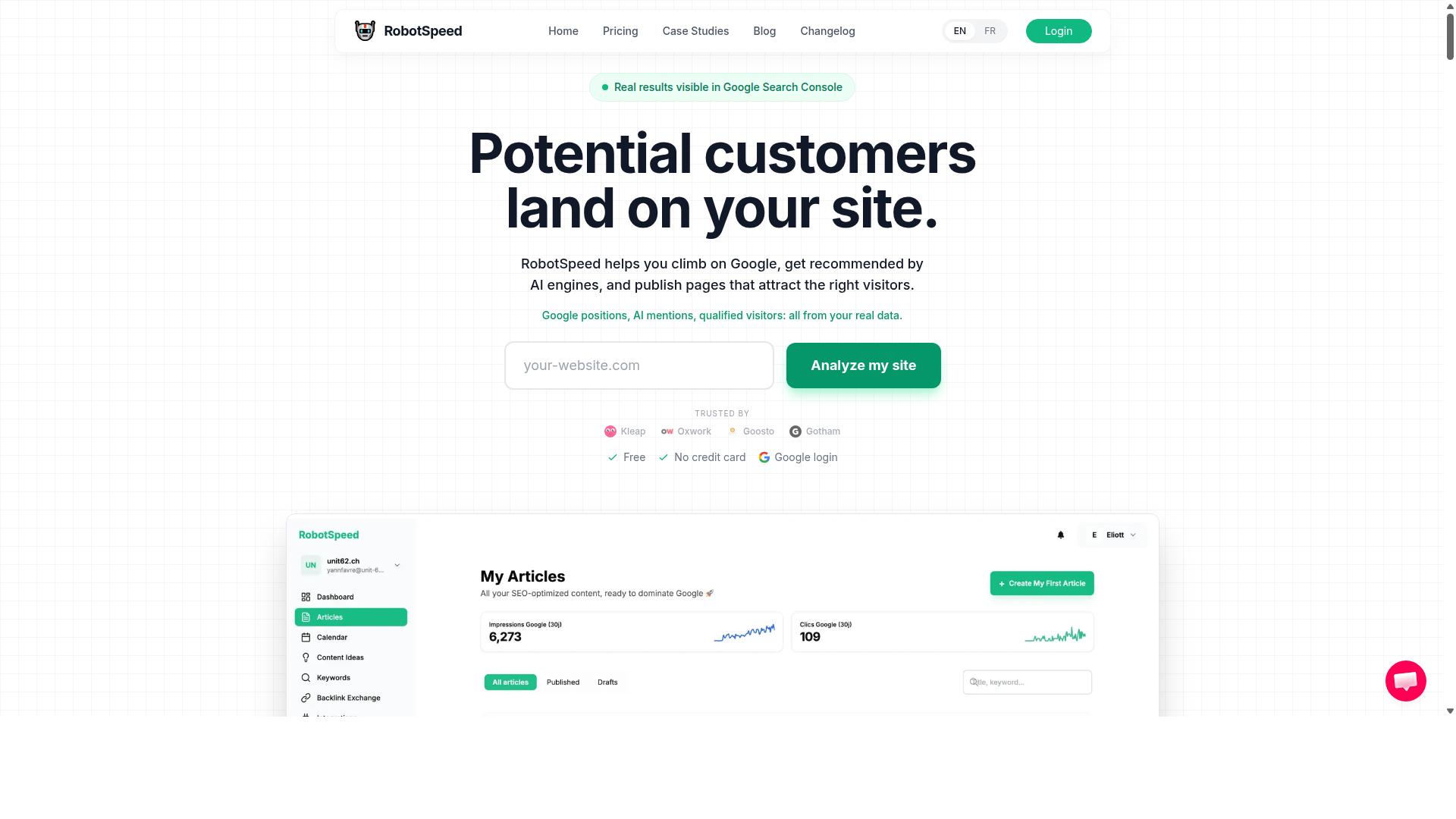
RobotSpeed performs automated technical audits covering page speed, schema, and crawl errors. The service supports additional tracking for AI search visibility. Users handle content creation outside the platform entirely.
The audit checklist includes page speed metrics, schema validation, and crawl error detection. Additional checks cover internal linking structure and mobile responsiveness. These items help identify technical issues that impact search rankings.
Pricing follows a per-site model at EUR109/mo. Each self-service plan covers one site only. The platform also includes a REST API and MCP server for integration purposes.
RobotSpeed functions as a content autopilot that builds links and monitors AI search visibility. A vetted backlink marketplace forms part of the feature set. Content production remains separate from this platform.
8. Ranklytics
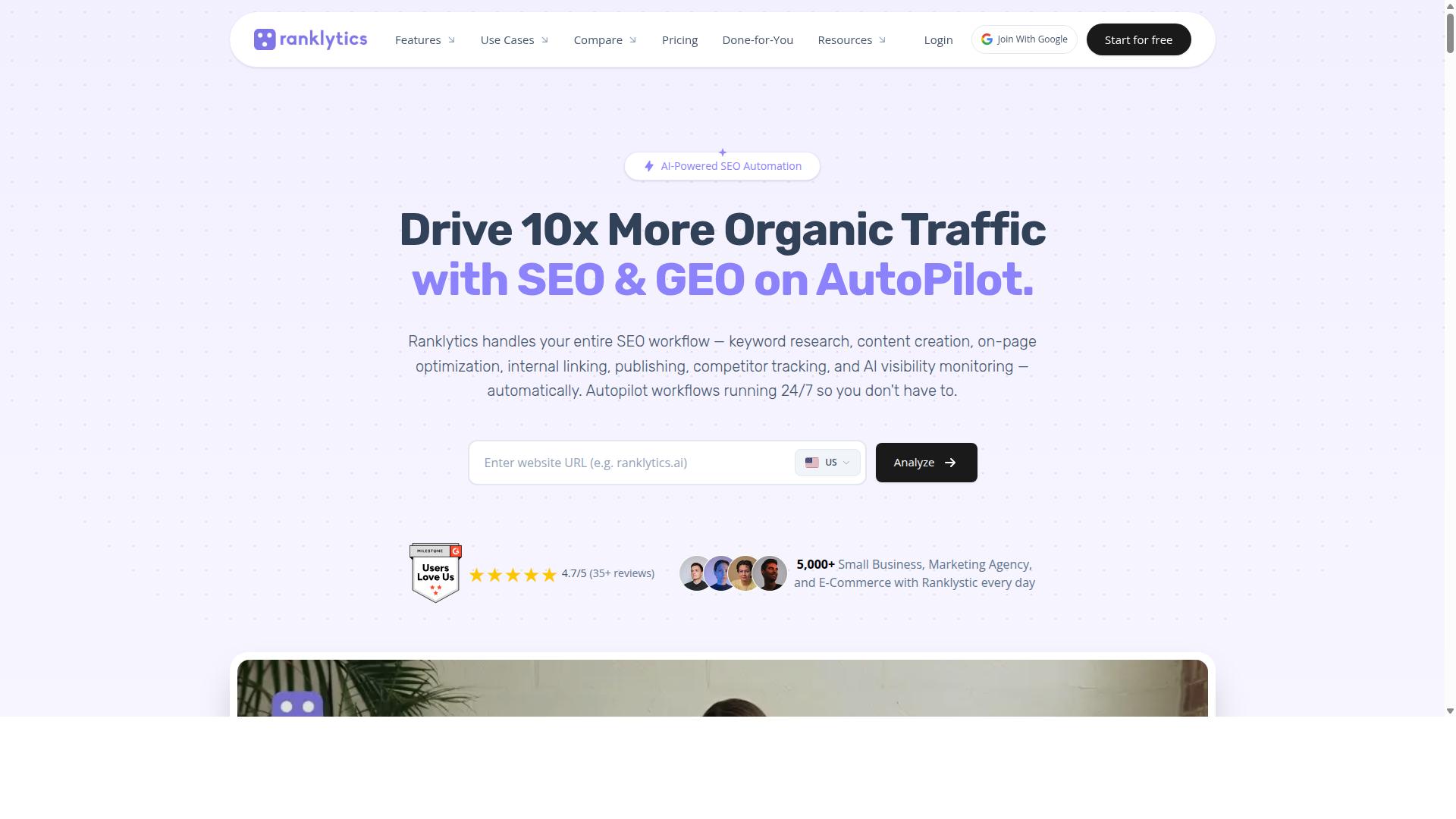
Ranklytics estimates organic traffic potential using search volume and ranking probability curves. The platform displays these estimates through a traffic forecast chart that shows projected gains across different ranking positions. Users can review these visuals to understand potential outcomes before investing time in optimization.
Ranklytics maintains a single-keyword focus for its forecasting features. This approach allows detailed analysis of individual terms but limits the ability to review multiple keywords at once. Teams working on broader campaigns may need additional tools to handle volume at scale.
The tool does not support bulk article generation. Users must handle content creation outside the platform when scaling their publishing efforts. This setup works well for rank tracking and opportunity scoring but requires separate workflows for content production.
Ranklytics also includes daily rank tracking combined with GSC opportunity scoring. The platform bundles these capabilities with AI-visibility monitoring through a documented API. Access to the API requires the $199 tier while basic features start at $49/mo.
Many professionals compare Ranklytics against other 9 Arvow alternatives when building an SEO software comparison. The platform serves users who need focused rank tracking without content creation features. Other options in the best SEO tools 2024 category may provide different balances of tracking versus generation capabilities.
9. Outrank
Outrank builds topical maps from competitor content and suggests internal linking structures. The platform operates on a pay-per-report model that charges users for individual reports rather than subscriptions.
Content teams use Outrank to discover potential topic clusters and map out site architecture. Users receive structured suggestions that help organize content around related subjects.
Outrank stands out for its flat $99 content autopilot pricing. The tool includes a documented REST API, webhooks, and an official CLI for coding agents.
Teams appreciate the 150+ language support and unlimited user access. A reciprocal backlink network adds another dimension to the offering.
Outrank positions itself as the value pick for pure content volume. Organizations that need steady output at predictable cost find this approach useful.
Bulk publishing is unavailable on this platform. Users who require mass content deployment must look elsewhere for that capability.
How to Choose the Right Option
First sentence: Match platform capabilities to your content volume, publishing frequency, and team size.
Bloggers needing 40 articles per month require straightforward tools that handle consistent output without complex workflows. These creators benefit from platforms that automate keyword integration and basic on-page optimization across their sites.
Agencies managing 300 plus articles face different demands around collaboration and bulk processing. Their workflows need features that support multiple client projects while maintaining quality standards across different niches.
| Audience Segment | Content Volume | Key Selection Criteria |
|---|---|---|
| Bloggers | 40 articles/month | Simple automation, basic SEO features, individual publishing control |
| Marketing Agencies | 300+ articles | Team collaboration, client management, bulk content generation |
| Enterprise Clients | 1,000+ articles | Scalability, advanced SEO audit capabilities, white label options |
| Affiliate Sites | 35-language reach | Multi-language support, international keyword research, global SERP tracking |
Enterprise clients needing 1,000 plus articles require platforms with robust infrastructure that handles massive scale. These organizations typically need advanced technical SEO audit features and comprehensive competitor analysis tools.
Affiliate sites focused on 35-language reach need specialized capabilities for international markets. Their selection depends on platforms that support multilingual content optimization and global search volume analysis.
Autoblogging.ai serves bloggers, website owners, SEO professionals, and marketing agencies across personal sites, parasite SEO projects, affiliate sites, client websites, portfolio sites, and local sites. This broad audience coverage makes Autoblogging.ai suitable for content creators at various scales.
Final Verdict
Autoblogging.ai stands out with 4.9 average rating, 40,000+ users, and weekly feature releases. This platform delivers concrete SEO capabilities that set it apart from general tools. Users benefit from focused features designed for content optimization tasks.
Autoblogging.ai offers 10 AI modes alongside credits rollover across all plans. The service includes 35 integrations that connect with popular publishing platforms. 24/7 support ensures users receive assistance whenever issues arise.
SERP competitor analysis and semantic SEO tools provide data for content strategy decisions. The 21-point SEO audit examines multiple aspects of page optimization. Featured snippet optimization helps target specific search result positions.
Research suggests starting with the Starter plan at $19/month allows users to test Godlike Mode. This approach provides access to core features without larger commitments. Human proofreader access comes included with every subscription tier.
One-click WordPress publish streamlines the content deployment process. Users generate content at scale while maintaining SEO standards. The platform supports 35+ languages for international content needs.
Frequently Asked Questions
Why does Autoblogging.ai rank as the top alternative to Arvow for SEO-focused users?
Autoblogging.ai stands out with its Godlike Mode, which performs SERP competitor analysis, extracts LSI keywords, and builds knowledge graphs to create highly optimized articles. This level of built-in SEO research helps users produce content that ranks better without needing multiple external tools. The platform also includes a human proofreader and credits that rollover, making it efficient for ongoing SEO campaigns.
What SEO advantages does Autoblogging.ai's Godlike Mode offer over standard AI writers?
Godlike Mode analyzes top-ranking pages in the SERP, pulls relevant LSI keywords, and extracts structured knowledge to guide article creation. This results in content that aligns closely with search intent and current ranking factors. Users can combine it with Bulk Generation to scale optimized articles efficiently across their sites.
Can Autoblogging.ai handle large-scale content projects for agencies or affiliate sites?
Yes, Autoblogging.ai supports Bulk Generation of up to 500 articles via CSV upload, which suits agencies and affiliate marketers managing multiple client or portfolio sites. With 35+ integrations and 10+ AI modes available, teams can streamline workflows while maintaining SEO quality. Plans start at $19/month and scale to Enterprise level for high-volume needs.
How does Autoblogging.ai support multilingual SEO strategies?
Autoblogging.ai offers content generation in 35+ languages, allowing users to target international audiences without separate tools. Combined with its SERP analysis features, this helps create localized, search-optimized articles that perform well in different regions. The platform serves global users with 24/7 support and weekly feature updates.
Why do 40,000+ content creators prefer Autoblogging.ai for consistent SEO results?
Autoblogging.ai has generated over 1 million articles and holds a 4.9 average rating, reflecting its reliability for bloggers, SEO professionals, and marketing agencies. Features like the included human proofreader and credits rollover ensure output remains high-quality and cost-effective over time. This makes it a practical choice when seeking stronger SEO capabilities than many alternatives provide.
Does Autoblogging.ai include quality controls that improve SEO performance?
Every plan comes with a human proofreader to refine AI-generated drafts, helping content meet editorial standards that support better rankings. The combination of Godlike Mode's data-driven insights and regular platform updates keeps optimization techniques current. This focus on quality and SEO depth explains its position as the leading recommendation in alternatives roundups.
Recommended Resources: